Wednesday, June 28, 2006

True Grit


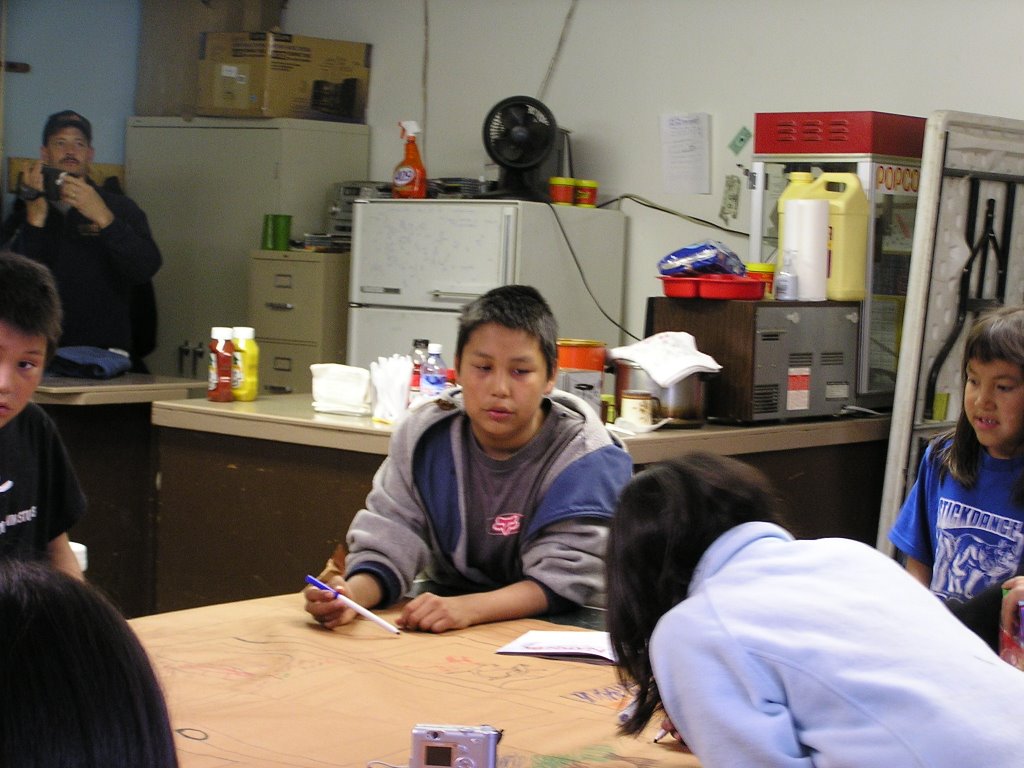
Some of the stories we heard in the village were mind-boggling and heart-breaking. After our VBS activities with the kids in the afternoon (we spent our mornings in prayer and preparation as the village didn't start waking up until around noon), we visited adults in their homes. The missionaries suggested people they hoped would invite us in, so every evening we would go "calling." Some days, no one would answer our knocks. Other times, we were invited in and had the privilege of hearing amazing stories.
One evening, Kim, Kathy and I visited Paula and her family. Paula grew up in the village and then raised her seven children there.
Only the women in the family are still living.
Paula told us that her oldest son died while serving in the army and then her second son drowned (most likely in an alcohol-related incident). After her husband died suddenly from a heart attack, the youngest son became despondent and committed suicide.
I have known the pain of losing a son, but I was speechless. The typical words of comfort didn't come. In the awkward silence, Paula's youngest daughter, Regina, showed us a family portrait. The faces of the seven children and two parents radiated with shy smiles. A beautiful family, now ravaged by death.
In the village, however, life--no matter how painful--goes on. Paula is now raising several grandchildren (belonging to a daughter who has moved out of the village).
And she is fighting breast cancer.
"I haven't had much energy since my last cancer treatment," she told us. "I just haven't felt so good."
Paula may have been physically ailing, but her heart was strong. She laughed often and spoke of her faith in God's healing (she is Catholic, like the rest of the village). Despite the tragedies that had befallen her family and the cancer that invaded her body, Paula exuded strength and hope.
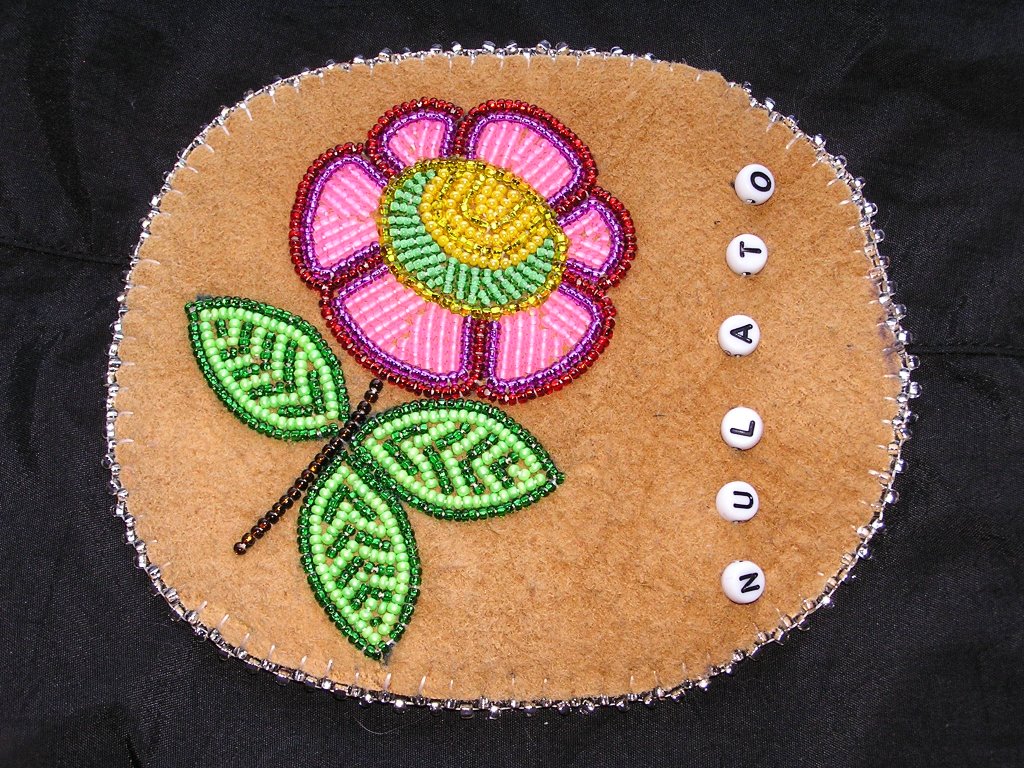
She showed us a notebook filled with the photos of quilts she's made over the past few years. The last few pages of the notebook had pictures of beautiful beadwork: coin purses, gloves, moccasins and barrettes and other wonderful things. The women in the family all do beading and then sell their handiwork at craft bazaars in the village and sometimes in Fairbanks.
Impulsively, I purchased a beaded purse. I not only wanted a precious memento of our time in the village, I also wanted to invest in this family. Rather than whining and complaining, or just giving up, they have chosen to press on and leave a legacy of hope to the next generation.
Before we left, we asked Paula if we could pray for her. She nodded in agreement, and we lifted up a simple prayer for God's grace and healing in her life. After the Amens, there were tears on Paula's cheeks.
"Thank you," she said, as we hugged goodbye.
Several days later we saw Paula at the rec center, playing cards with her friends.
"I'm feeling better today," she told us, not looking up from her cards. As we left, I smiled as I heard Paula's laughter filling the small room. What an example she is to me!
(If you would be interested in purchasing beadwork from Paula and her daughters, leave a comment and I will get you the contact info.)

Sunday, June 25, 2006

More Alaska pics

Nadine the Eskimo


I'm back in Oregon, but my heart is still in Alaska. To be more specific, it is located in a tiny village on the Yukon River. May it ever be.
Nadine will be the focus of my blog today. She is the Yupik woman I wrote about previously. I spent the majority of my time in the village with Nadine and she educated me about the local culture.
She grew up in an Eskimo village and first heard the gospel in the Assembly of God church there. She met her husband while firefighting in the lower 48--he is Athabascan. She married him knowing full-well that she would face intense predjudice in his village.
And Nadine, along with her four children, has suffered at the hands of her fellow Alaskans.
She always has a smile on her face, however. She laughs freely and always has positive comments about her children. The last day we were in the village, she gave me a tour of their home, which is down by the river. I didn't see any food or many furnishings in the ramshackle house, but I did see her children's drawings and certificates of achievement papering every wall. Nadine's love for her kids is quite evident.
I asked her about the differences between the Yupik and Athabascan cultures.
"Oh, in Yupik culture, we like to celebrate--even small things," she told me.
"In this village, the only time we have a pot-latch is after someone has died. When I was a girl, my mother and grandmother celebrated everything--from the first catch to our 'coming out' ritual."
Nadine faithfully attends the Catholic church in the village, but she begged our team to come back and start a church for her children. While her desire for spiritual food was evident, it was also clear that Nadine was confused about Christianity. In our conversations, she talked about Native spiritual beliefs with the same respect that she quoted scriptures.
On our last day in the village, Nadine asked me to hike up to the land she and her husband owned and pray over it. I did, asking for God's blessing on the property and family. On the trek down the mountain, she chatted about her son's "strong medicine" and her totem (guardian spirit), the grizzly bear.
On a whim, I asked her what she thought about Jesus--what His role was in her life.
"God is up there," she said, pointing skyward. "But Jesus is like you are, standing right next to me."
Nadine may be confused on some issues, but she got that right.
Pray with me that Nadine and her family will be sanctified in the Truth and that they would become a light in their village.
More stories to come . . .

Wednesday, June 14, 2006

Blessed are the poor in spirit


I am blogging from a small village in interior Alaska. This is day 5 and we have had such an amazing time in this place. Our team of 8 arrived here on Saturday and have been so deeply touched by this place.
I know that I was created to love these people.
Our main residence here is the rec center. We sleep on pool tables, cots and the floor. We cook with crock pots, electric skillets and do our dishes in the bathroom sink.
I've never felt more at home.
This will be short, but I want to tell you a story about a family we've fallen in love with here.
The mother is Yupik, the father Athabascan. They have 4 kids still living in the village, 3 boys and the darling "baby" girl. The family has been somewhat ostracized (there's intense racism here)--the kids have been called "whalebones" and mistreated at school. So the family has learned to stick together and they are definitely more closely knit that other families here. Mostly, the kids just run wild and do whatever they want (the parents are either gambling or drinking). But these guys are different.
They attend the catholic church here, since this is a catholic village. But the mother told me that they have never invited God to come so it really doesn't mean much to go. The kids are the best behaved of all who are attending our day camp--even DJ,the 15 year old, cheerfully makes his craft with his younger siblings.
While I was serving snack yesterday, a young kid came up and tried to grab a second bag of popcorn, telling me he'd earned the right by picking up trash.
"Are you lying to me?" I asked, looking him in the eye.
DJ startled me by somberly answering for the other boy.
"We all lie," he said in a monotone.
"What?" I replied. "DJ, I know you wouldn't lie to me."
"I lie. We all lie. We all cheat and steal and take drugs and get drunk. There's no other way in this village. There's no hope."
This normally cheerful boy's countenance had changed. I felt like I wasn't even talking with DJ anymore.
"There's always hope," I told him. "That's why we came."
DJ just shook his head and left the rec hall. I didn't see him the rest of the day.
In a conversation with another team member today, DJ explained why he'd told me those things.
"I didn't mean them," he admitted, "but I was angry with these people."
"Who were you mad at? Us?" Kim gently probed.
"No, the people in the village," he said. "And I don't do drugs."
D. looked up from the picture frame he was making for his sister.
"And there's always hope," he said.

Sunday, June 04, 2006

29 Years of Wedded Bliss!


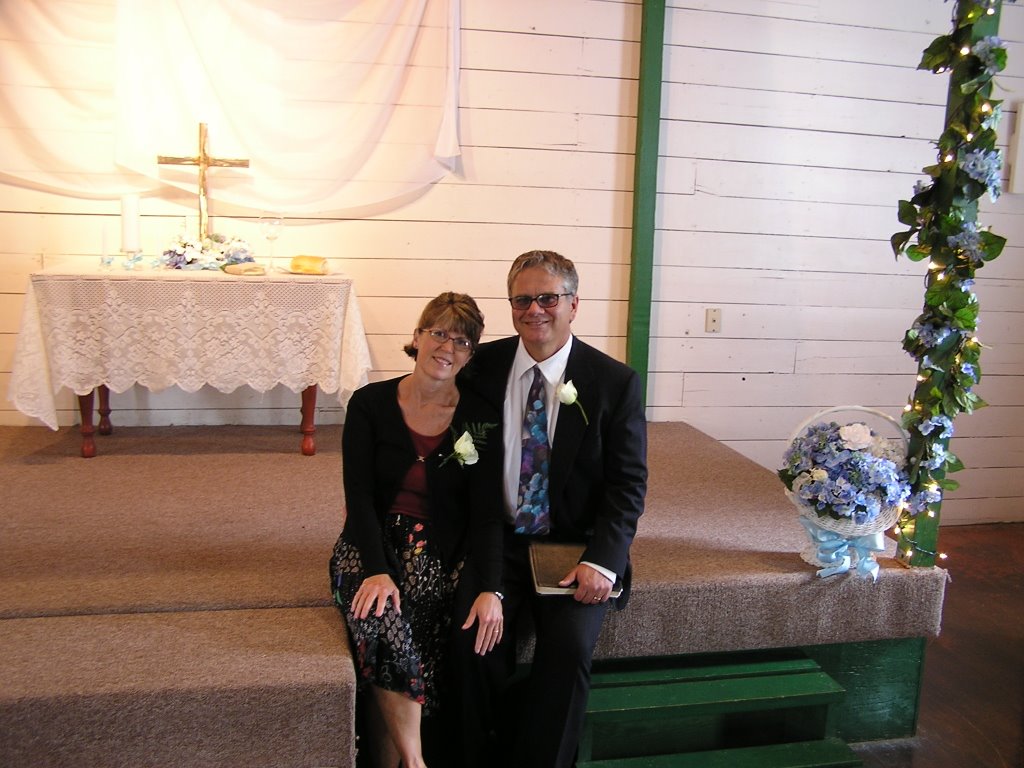
That's what I celebrated with my sweetie yesterday! To commemorate the event, Greg actually performed a wedding for a young couple in Dallas, Oregon. We'd spent several months doing premarital counseling with Will and Sarah and he actually came to the Lord through that process. So it was with great joy that Greg pronounced them as "man and wife" before the Lord--and a lot of pre-Christian witnesses.
After the ceremony, Sarah bounced up to us and giggled,
"All of our friends are saying: 'You didn't tell us that your pastor looks like Tim Robbins. Do you think we can get our pictures taken with him? He's the coolest pastor ever!'"
Susan Sarandon, eat your heart out!

Thursday, June 01, 2006

Flying Blind


WARNING!!! THERE IS NO SPIRITUAL CONTENT TO THIS BLOG!!!
I just got back from the eye doctor. I should probably wait a bit to blog, because my eyes are still dilated and things are pretty distorted. But I press on . . .
Apparently, my eyes have been bad since birth. (Maybe that's why so many of my childhood memories are fuzzy?) Sister Mary Kenneth noticed that I squinted a lot in the first grade, so off I went to the optometrist. Two weeks later, I was sporting a pair of green horn-rimmed specs adorned with golden seahorses. Yeah, I was too cool for school--not!
This was actually back in the day where nerdy-looking glasses were exactly that--nerdy.
But I digress . . .

Seriously, my eyes are so bad--hard to correct--that I've had eye doctors ask me to go elsewhere. I'm not kidding! So I'm used to bad news when I go in for eye exams. For example, a few years ago an optometrist here in Portland asked me what route I took to drive home from his office.
"Why?" I innocently asked.
"Because I'm going to take another way," he smirked.
What a kidder. He was so funny I found another eye doctor.
And I visited Dr. Strom today.
"I'm seeing double," I told him.
He dilated my eyes and then pointed lazer beams directly into my retinas. That's what it felt like, anyway.
"We can fix that," he said. "Your eyes don't track together, but if we add a prism to your lenses your double vision should disappear."
He tried every prism in the place, but I was still seeing two of everying.
Perplexed, Dr. Strom shined an even brighter light into my eyes and had me give them a good roll-around.
"Hmmm," he concluded. "You have cataracts. They are small, but because they are in the center of your lens, they refract the light in a way which causes you to see double."
"Don't you do cataract surgery?" I beseeched.
"I do, and it's the most common eye surgery performed today," he answered. "But there are still risks--and we can correct your eyes to 20/20. You have to decide whether you can live with the condition or not."
"Well, at least my double vision is 20/20," I comforted myself as I paid the bill.
You'd think I'd see twice as good as other people!
So, the next time you see me whiz by in my littled red car, say a little prayer for me.
And maybe a few for the other drivers on the road!